“How many people will have to die before we will take a stand? How many children will have to cry, before we do all we can? – Michael Jackson, What More Can I Give
Protecting the rainforest home of the ‘Moonwalking’ Red-capped Manakin bird
Posted on by Dee
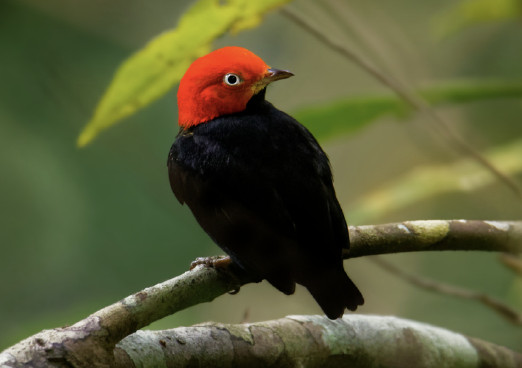
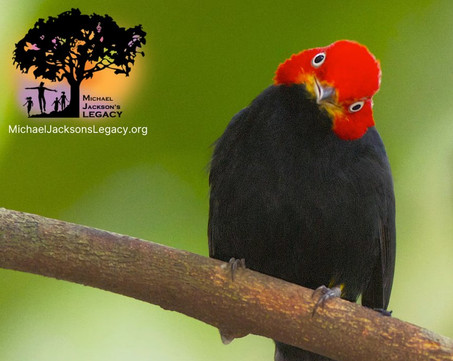
In tropical forests across Central America and Chocó lives one of nature’s most charming birds – the Red-capped Manakin. This small, vibrant bird is famous for its extraordinary courtship dance, where the male performs a gravity-defying “moonwalk” along a branch to attract a mate, earning global recognition and comparisons to pop icon Michael Jackson.
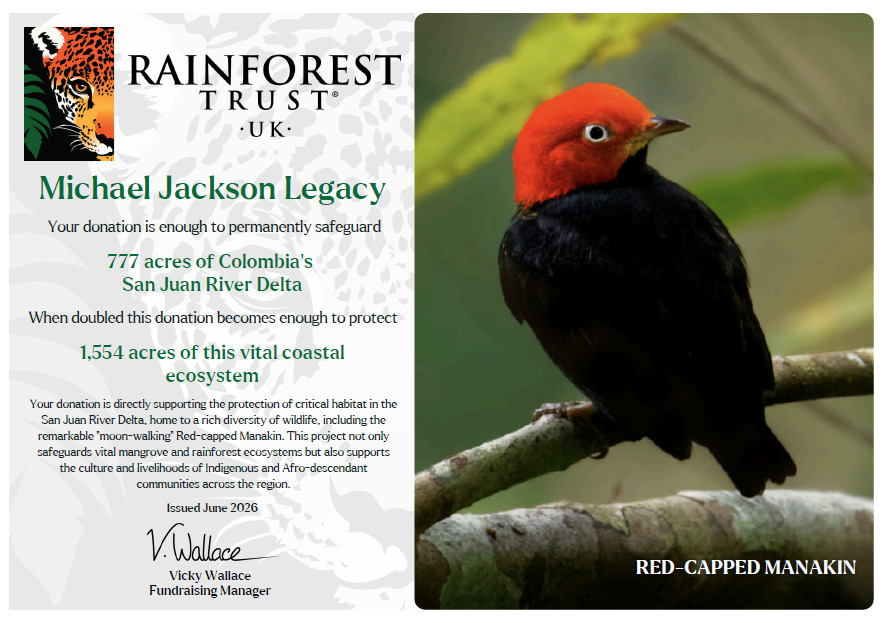
The Red-capped Manakin’s dazzling dance is a symbol of the unique biodiversity found in the threatened ecosystems of places like Colombia’s San Juan River Delta. Michael Jackson’s Legacy (MJL) has been delighted to partner with the formidable Rainforest Trust in order to help protect this vital ecosystem and the intricate web of life that depends on these forests and wetlands for survival.
Rainforest Trust had already secured over 70% of the funding for an urgent project to defend critical habitats in the San Juan River Delta for unique wildlife like the Red-capped Manakin, and MJL was happy to step in to help them as they attempted to secure the final 30% and to complete their ambitious milestone.
Our aim was to raise 2,750 GBP, enough funds to protect 777 acres of this irreplaceable habitat. By August 2026, we’d not only raised that amount in full, but Rainforest Trust very generously doubled that amount, ensuring that a massive 1554 acres of this magnificent habitat is protected for posterity in Michael Jackson’s memory and through his precious example.
This project fit so perfectly with our mission, to protect the environment, safeguard wildlife and communities, and prevent needless suffering. Indeed, Michael Jackson was very familiar with the plight of the rainforest and its huge importance, so much so that one of the locations he chose to depict in his video to his number one hit ‘Earth Song‘ was the Amazon Rainforest, a large part of which was destroyed just a week after the video’s completion.
From the “moonwalking” Red-capped Manakin to the majestic Jaguar, this wonderful Michael-like project helped to deliver maximum conservation impact for species, communities, and climate, in Michael Jackson’s memory, creating a lasting impact for Colombia’s exceptional ecosystems and biodiversity.
“I respect the secrets and magic of nature. That’s why it makes me so angry when I see these things that are happening, that every second, I hear, the size of a football field is torn down in the Amazon. I mean, that kind of stuff really bothers me. That’s why I write these kinds of songs, you know. It gives some sense of awareness and awakening and hope to people. I love the Planet, I love the trees. I have this thing for trees – the colors and changing of leaves. I love it. I respect those kind of things. I really feel that nature is trying so hard to compensate for man’s mismanagement of the planet. Because the planet is sick, like a fever. If we don’t fix it now, it’s at the point of no return.”
– Michael Jackson, 2009
IMPORTANT INFORMATION ABOUT THIS PROJECT, FROM RAINFOREST TRUST:
What Makes the San Juan River Delta So Special?
The San Juan River Delta, on Colombia’s central Pacific coast, is home to highly diverse ecosystems, including tropical rainforests, mangroves, and coastal wetlands. Recognised as a Key Biodiversity Area and Important Bird Area, it also sustains Afro-Colombian and Indigenous Wounaan communities, who have thrived here for over 300 years. Yet, despite its great ecological and cultural value, the delta remains legally unprotected, leaving its biodiversity and the traditional livelihoods of its people increasingly at risk.
Fed by 660,000 gallons of freshwater per second from a 4-million-acre watershed, the San Juan River creates nutrient-rich habitats vital for life. Its forests and waters:
● Host 120 bird species, including the Red-capped Manakin, Great Curassow and 19 migratory shorebirds. ● Provide key breeding habitat for sharks and rays, including the Critically Endangered Scalloped Hammerhead – a top predator that has declined globally by over 80%. ● Support four threatened sea turtle species vulnerable to poaching and bycatch. ● Contain six endemic fish species, some new to science. ● Supports Jaguars and ocelots to roam its forests. ● Shelters rare plants like the endemic Zamia chigua that face illegal collection.
In addition, local communities depend on the delta for sustainable fishing, hunting, artisanal logging, and non-timber forest products. Their food security, livelihoods, and cultural identity are deeply tied to this landscape.
However, habitat loss is accelerating, driven by expanding plantations, settlements, and major infrastructure such as seaports and highways. Pollution, poor waste management, mangrove overharvesting, logging, illegal wildlife trade, and harmful fishing practices are degrading both land and sea environments.
Rainforest Trust is working in partnership with the Wildlife Conservation Society–Colombia to establish the San Juan River Delta Regional Protected Area, spanning 390,000 acres of land and sea. This proposed area includes important sections of the Chocó rainforest, connecting the delta to the western Andes mountains, one of the most biodiverse regions on Earth.
Conservation measures in the new Protected Area will be guided by the resident Afro communities and Wounaan Indigenous communities. Both groups will be engaged in planning and managing fishing practices, sustainable harvesting, and waste management strategies. Protecting this critical habitat will secure a future for the animals that make their home in the river delta, including the Red-capped Manakin.
Key project activities include:
● Establishing the Regional Marine Protected Area (MPA). ● Strengthening protected area management. ● Establishing participatory monitoring programs, with seasonal assessments measuring the abundance and composition of threatened species. ● Community outreach and engagement to involve and empower local communities.
In addition to this, it will lead to the following outcomes:
Support for Communities: Around 5,600 residents will directly benefit from more sustainable livelihoods, made possible through the protection of vital natural resources that support food security, income, and traditional practices.
Climate Protection: The protected area is estimated to store 55.8 million metric tonnes of CO₂e, offering significant climate mitigation and flood regulation benefits.
Protection for Wildlife and Ecosystems: The area’s rich habitats – including mangroves, beaches, and wetlands – will be permanently protected, creating a safe home for jaguars, ocelots, sea turtles, rare frogs, and yes – birds like the ‘moonwalking’ Red-capped Manakin!